



Medical Courier & Specimen Transport
A medical courier service built for diagnostics. Temperature is monitored, custody is documented at every handoff, and every shipment is tracked, across all 50 states.
400K+
Shipments Per Month
99.7%
On-Time Delivery
50
State Coverage
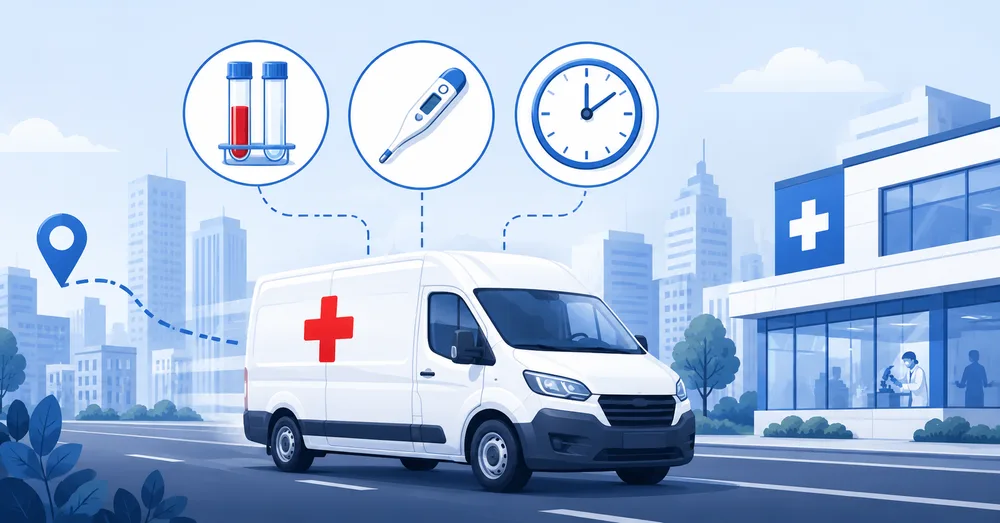
What is a medical courier?
A medical courier is a specialist transport provider that moves medical items, most often diagnostic specimens, between the place they are collected and the place they are processed or used. That includes blood, urine, tissue, and swabs travelling from a clinic, hospital, or patient's home to a laboratory, plus lab supplies, collection kits, pharmaceuticals, and in some cases organs and tissue for transplant.
What separates a medical courier from a standard parcel or gig-economy delivery driver is not the vehicle. It is the controls around the cargo.
Temperature control
Specimens travel ambient, refrigerated, or frozen depending on the analyte, with monitored and recorded conditions rather than an insulated bag and hope.
Chain of custody
Every handoff is documented, so a laboratory can prove who held a sample, when, and under what conditions.
Regulatory training
Diagnostic specimens are regulated cargo. The people who package and carry them require formal hazardous-materials training.
Time discipline
Many analytes are stable only for a defined window, so routes are designed around specimen stability limits, not driver convenience.
Traceability
Real-time tracking and delivery confirmation, so a missing sample is located rather than reconstructed after the fact.
Healthcare-first network
Built to meet healthcare regulatory requirements from the ground up, not adapted from a general freight operation after the fact.
In short: a medical courier is a controlled, auditable extension of the laboratory, not a delivery service that happens to carry medical boxes.
Transport is part of the test
It is tempting to treat transport as a commodity that starts after the real work is done. Laboratory medicine says the opposite, because most of what goes wrong with a test result happens before the sample reaches an analyzer. A landmark study found that 61.9% of laboratory errors occur in the pre-analytical phase, the collection, handling, and transport stage. The most common reason a sample is rejected outright is hemolysis, identified in one review as the leading cause of unsuitable specimens and driven largely by collection, handling, and transport problems.
Stability is measured in hours, not days. CLSI guideline PRE04 notes that handling, transport, processing, and storage conditions can alter the trueness of a result, and its stability tables show how narrow the windows are: homocysteine in EDTA holds for 24 hours at 2 to 8°C but under 2 hours at room temperature, and HbA1c for 24 to 72 hours refrigerated but only 6 hours at 26 to 35°C. Our cold chain shipping guide covers the standard temperature ranges and how a compliant packout is built.
The regulations reflect this. Under CLIA, US laboratories must establish and follow written policies and procedures covering specimen collection, labeling, storage and preservation, the conditions for specimen transportation, processing, and specimen acceptability and rejection. In practice, a lab's transport conditions are its courier's operating specification, so a courier that cannot meet or evidence them puts the lab's own compliance at risk.
Specimen Transport, Reimagined
From same-day local routes to international air freight, DS2's logistics network is purpose-built for healthcare.
Medical Courier Services
Trained medical couriers for scheduled and on-demand specimen pickups, with temperature-controlled vehicles, chain-of-custody documentation, and the ability to have GPS tracking on shipments.
Specimen Transport & Tracking
Real-time specimen tracking from pickup to laboratory receipt, with temperature monitoring, delivery confirmation, and full chain-of-custody records at every handoff.
STAT & Next Flight Out (NFO)
Priority and air transport for time-critical specimens, tissue, and urgent laboratory samples, tendered as air cargo on the next available flight by a TSA Indirect Air Carrier.
International Shipping
Cross-border specimen and supply shipping with IATA and DOT compliant packaging, customs documentation, and temperature-controlled international logistics.
Biostorage Services
Compliant, monitored storage for specimens and biological materials, with ambient, refrigerated, frozen, and ultra-low temperature options and full audit trails.
Route Optimization & Logistics Consulting
Data-driven route planning and logistics consulting to reduce transit times, cut costs, and improve on-time delivery across your specimen transport network.
For how a specimen is tracked and documented between the draw and the bench, see specimen transport & logistics. For time-critical air moves, see next flight out & STAT shipping.
From Assessment to Optimization
A structured approach to building and continuously improving your specimen logistics network.
Need a custom protocol or clinical trial workflow? Talk to a kitting specialist.
Needs Assessment
We map your pickup locations, specimen types, volume patterns, and delivery windows to design the optimal logistics network for your organization.
Network Design
Custom courier routes, carrier partnerships, and contingency plans built around your schedule, with temperature requirements and compliance needs factored in from day one.
Launch & Training
Couriers are trained on your specific protocols, chain-of-custody requirements, and specimen handling procedures before the first pickup.
Ongoing Optimization
Continuous route analysis, performance reporting, and proactive adjustments keep your logistics running at peak efficiency as your needs evolve.
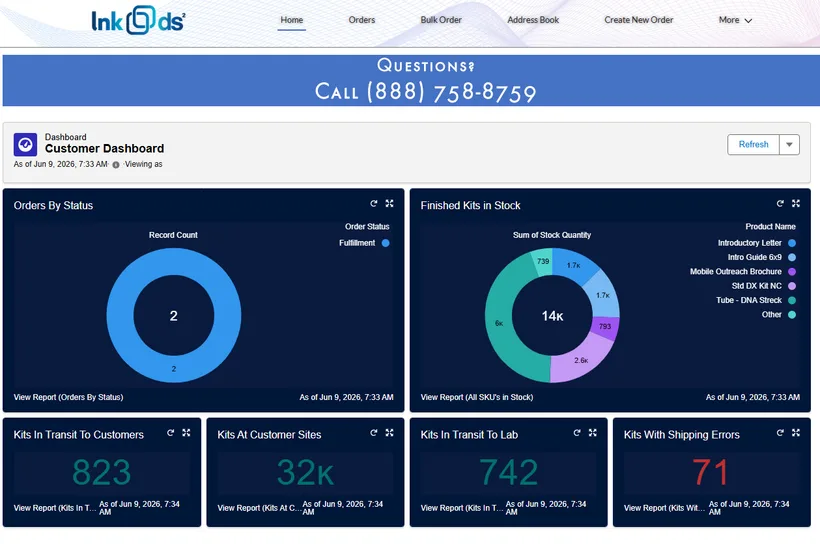
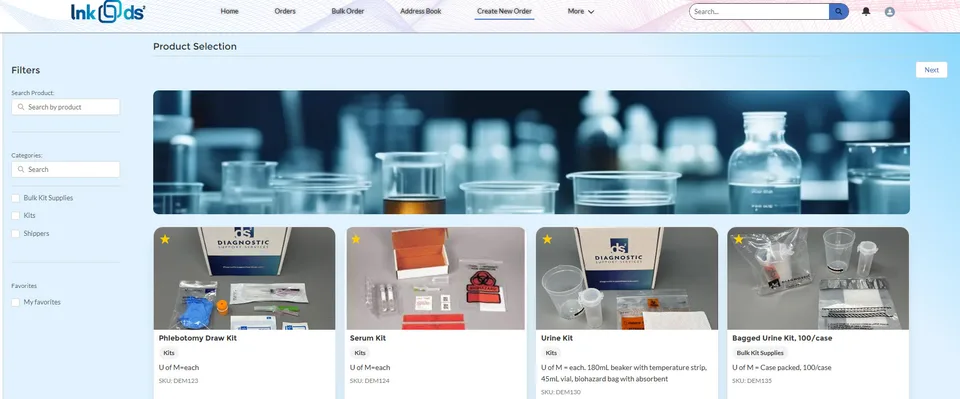
Manage Every Kit in LNK2DS2
Order custom kits, track every shipment in real time, and pull the reports you need, all from one secure portal built for lab operations teams.
Use Every Capability. Reap Every Benefit.
DS2's four core services work as a single, integrated stack: from the kit on the bench to the result in the EMR. Use one and you get a great vendor; use them together and you get a partner.
Custom Kits, Built to Your Protocol
Clinical trial or routine panel, every kit is configured to your exact spec and assembled the same way every batch. Procurement, build, QC, and distribution all happen under one roof, so you spend less time managing vendors and more time running your lab.
Explore KittingConfigured for your workflow
Components, labels, and packaging assembled to your exact spec, and rebuilt the same way every batch, every time.
Quality at every step
FDA-registered facility with documented assembly checks, lot-level traceability, and continuous improvement programs on every kit.

See it all working together
View the full end-to-end solution
Healthcare-Grade Logistics
Moving diagnostic specimens is regulated activity, not general freight. Most specimens ship as Biological Substance, Category B (UN3373) under Packing Instruction 650, which requires a triple packaging system with absorbent material, a 95 kPa pressure rating for liquids, and a package that survives a 1.2 m drop test (our UN3373 packaging guide covers the full specification). People whose work directly affects hazardous materials transportation safety are hazmat employees under US DOT rules, and must be trained, tested, and retrained at least once every three years.
Specimens also travel with patient identifiers. HHS treats organizations that act merely as conduits, transporting information without accessing it beyond what the job requires, as outside the business associate rules. That exception is narrow: a provider that stores specimens, handles requisition data, or runs chain-of-custody and tracking systems containing patient information goes beyond a conduit and is a business associate. DS2 operates on that basis, under HIPAA-compliant processes.
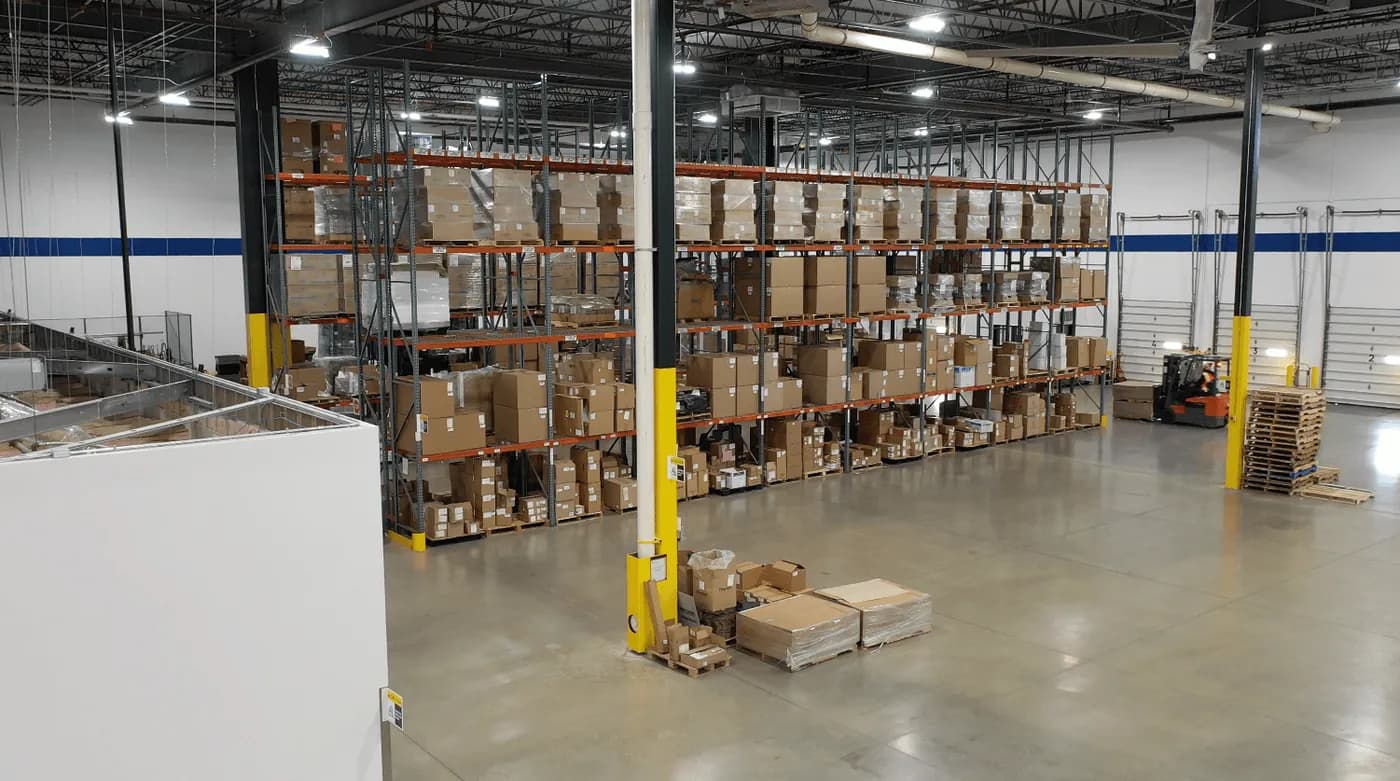
How to choose a medical courier service
Providers in this market look similar on a website and behave very differently at 6am on a Sunday. These are the questions that separate them.
Healthcare-specific, or general freight with a medical label?
Ask what proportion of their volume is clinical, and whether couriers are hazmat-trained for Category B (UN3373) shipments.
Can they evidence temperature control?
Monitored and recorded, or just an insulated container? Ask to see the data a temperature excursion would actually produce.
Is chain of custody documented at every handoff?
If a sample goes missing, can they reconstruct exactly who held it and when, or only estimate?
What does tracking actually show you?
Live shipment status your team can see for itself, or a phone call to dispatch?
How do they handle STAT work and failure?
What is the escalation path when a route breaks, and what is the contingency for a missed pickup?
Do they meet your CLIA transport criteria?
Your lab must define acceptable transport conditions. Your courier has to be able to operate within them and evidence it.
Can they scale and consolidate?
Routine routes, STAT runs, NFO, international, and storage under one accountable partner beats stitching four vendors together.
Logistics that connects to everything else
DS2 runs specimen logistics as an integrated service rather than a standalone delivery contract. The same partner that builds your custom collection kits transports the specimens they come back in, tracks them through the LNK2DS2 client portal, and connects the resulting data to your LIS or EMR.
That matters most when something goes wrong, because there is one accountable operator rather than a chain of vendors pointing at each other.
Medical courier questions
What is a medical courier?
A medical courier is a specialist transport provider that moves diagnostic specimens, lab supplies, pharmaceuticals, and other medical items between collection sites and laboratories or care settings. Unlike a standard delivery service, a medical courier operates with temperature control, documented chain of custody, hazmat-trained personnel, and real-time tracking.
What is the difference between a medical courier and a regular courier?
Controls. A medical courier handles regulated, time-sensitive, often irreplaceable cargo, so it operates temperature-controlled and monitored transport, documents chain of custody at every handoff, employs hazmat-trained staff for Category B (UN3373) specimens, and designs routes around specimen stability limits rather than general delivery efficiency.
How are diagnostic specimens packaged for transport?
Most are shipped as Biological Substance, Category B (UN3373) under Packing Instruction 650: a leak-proof primary receptacle, leak-proof secondary packaging with enough absorbent material to absorb the entire liquid contents, and a rigid outer packaging. For liquids the packaging must withstand 95 kPa of internal pressure and pass a 1.2 m drop test.
What is Next Flight Out (NFO) service?
Next Flight Out is priority air transport where a shipment is routed on the next available commercial flight rather than a scheduled freight service. It is used for the most time-critical medical cargo, such as organs, tissue, and urgent specimens, usually with hand-carry or white-glove handling at both ends.
Do medical couriers need to be HIPAA compliant?
It depends on what the courier actually does. HHS guidance says organizations acting merely as conduits for protected health information, transporting it without accessing it beyond what the transport requires, are not business associates. That exception is narrow: a courier that stores specimens, handles or keys requisition data, or operates chain-of-custody and tracking systems containing patient information goes beyond a conduit and is a business associate, which requires a business associate agreement and HIPAA safeguards.
How does DS2 track specimens in transit?
Shipments can carry GPS tracking with real-time status, plus temperature monitoring where the specimen requires it, delivery confirmation, and chain-of-custody records at each handoff, all visible through the DS2 client portal.
References
- 1.Carraro P, Plebani M. Errors in a stat laboratory: types and frequencies 10 years later. Clin Chem. 2007;53(7):1338-1342.
- 2.Lippi G, et al. Haemolysis: the leading cause of unsuitable specimens in clinical laboratories. Clin Chem Lab Med. 2008;46(6):764-772.
- 3.IATA Dangerous Goods Regulations, Packing Instruction 650 (UN3373); mirrored at 49 CFR 173.199.
- 4.CLIA, 42 CFR 493.1242: written policies and procedures for specimen collection, preservation, transportation conditions, and acceptability.
- 5.CLSI. PRE04, 1st ed. (2023), Collection, Transport, and Processing of Blood Specimens (replaces GP44-A4): specimen stability by time and temperature.
- 6.US DOT Hazardous Materials Regulations, 49 CFR 172.704: hazmat employee training and testing, recurrent at least every three years.
- 7.HHS Office for Civil Rights, HIPAA FAQ 245: couriers acting merely as conduits for PHI are not business associates.
Ready to Simplify Your Diagnostic Workflow? Let's Talk.
No commitment required. Our team responds within 24 hours.