

Mobile Phlebotomy & Specimen Collection
Certified phlebotomists deployed to hospitals, clinics, patient homes, and clinical trial sites. National mobile phlebotomy and staffing that scales with your volume and coverage map requirements.
15,000+
Certified Phlebotomists
50
State Coverage
Same Day
Deployment Available
What is mobile phlebotomy?
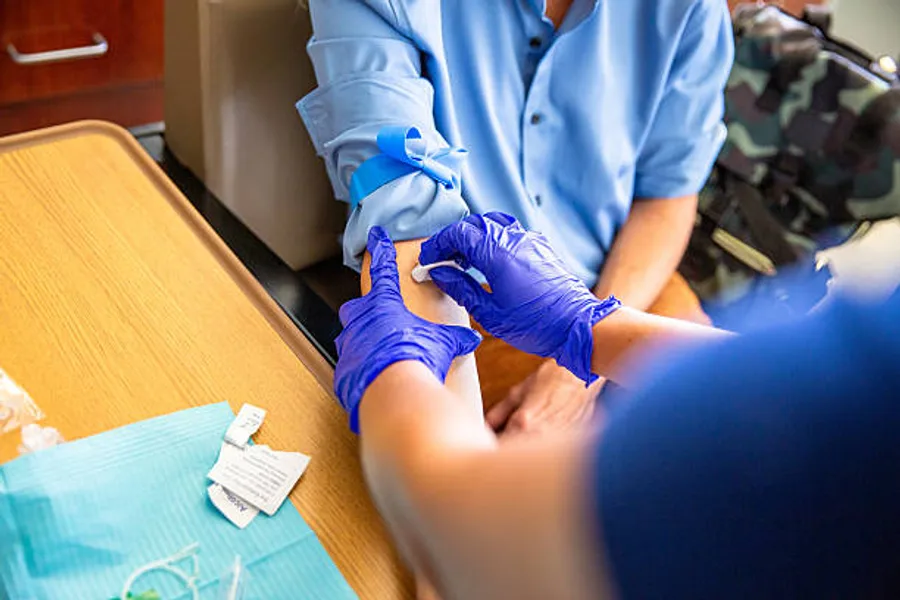
Mobile phlebotomy is blood and specimen collection performed by a trained phlebotomist who travels to the patient, rather than the patient travelling to a draw site. A mobile phlebotomist, sometimes called a traveling phlebotomist, collects the sample at the patient's home, workplace, or another agreed location, handles it to protocol, and routes it to the laboratory.
The clinical work matches a draw done in a hospital or patient service center. What changes is the setting and the logistics around it: scheduling, patient identification away from a registration desk, correct handling from an uncontrolled location, and documentation that holds up without a fixed-site workflow behind it.
For a lab, hospital, or study sponsor, mobile phlebotomy is usually a staffing and coverage question. You need certified phlebotomists in the right places, on the right days, trained on your protocols, without hiring and managing a national field team yourself.
One collection network, many settings
Mobile and on-site phlebotomy solve different problems for different buyers. DS2 covers the range under one operator.
Decentralized & hybrid trials
The FDA's 2024 guidance on trials with decentralized elements supports collecting samples at or near a participant's home. Protocol-trained phlebotomists handle in-home and local visits with GCP-aligned documentation.
Direct-to-consumer testing
Testing brands that ship a kit still need a qualified phlebotomist for the draws a patient cannot do alone. Mobile collection closes that gap without the brand building a field team.
In Office Phlebotomy coverage gaps
Cover a vacancy, a new service line, or a site without its own draw staff, without adding permanent headcount.
Corporate wellness & events
On-site teams sized for a room of 50 or an event of 5,000, for employer testing, wellness programs, and health fairs.
Insurance & occupational exams
Licensed phlebotomists for paramedical insurance exams, DOT physicals, and occupational health screening, deployed to a national standard.
Patient service center staffing
Staff and manage fixed draw stations, from a single location to a multi-state network, under one accountable operator.
Phlebotomy for Every Setting
From patient homes to clinical trial sites, DS2 provides certified phlebotomists wherever your specimens need to be drawn.
Mobile Phlebotomy
Certified phlebotomists dispatched to patient homes, workplaces, and community settings. Your schedule, your protocols, full documentation.
Patient Service Centers
Staffing, management, and operational support for patient draw stations and service centers, from one location up to a multi-state network.
On-Site Staffing
Phlebotomists placed directly in physician offices, hospitals, clinics, or labs: credentialed, background-checked, and trained on your specific workflows.
Clinical Trial Collections
Protocol-trained phlebotomists for clinical research: decentralized visits, site-based draws, and at-home collections with GCP-aligned documentation.
Corporate & Event Collections
On-site phlebotomy teams for corporate wellness events, health fairs, and employer-sponsored testing programs, sized for 50 participants or 5,000.
Medical Exam Services
Licensed professionals for insurance exams, DOT physicals, and occupational health screenings, deployed nationwide with standardized protocols.
The draw is a quality control point
Most of what goes wrong with a test result is decided before the sample reaches an instrument. One clinical laboratory study found that 61.9% of laboratory errors happen in the pre-analytical phase, the collection and handling stage a phlebotomist controls. Hemolysis, usually caused by collection technique, is the single most common reason a sample is rejected, cited in one review as up to 40 to 70% of unsuitable specimens.
Two controls a competent collection program never skips: positive patient identification with at least two identifiers before the draw, required by the Joint Commission (NPSG.01.01.01), where a room number does not count; and the correct order of draw under the CLSI venous blood collection standard (PRE02, formerly GP41), so tube additives do not cross-contaminate and skew a result. A trained phlebotomist follows both by habit. Away from a registration desk, in a home, that habit is what holds the line.
Who can legally draw blood
Most US states do not require a phlebotomist to hold a specific license or certification to draw blood. A minority do: California, Louisiana, Nevada, and Washington require certification or licensure, each with its own rules. A national program has to know which requirement applies where, and staff to the stricter of the state rule and the client's own standard.
DS2 credentials and background-checks every phlebotomist and trains them on client protocols before a first draw, whatever a given state's legal floor happens to be.
How to choose a mobile phlebotomy partner
For a lab or study team buying national coverage, these questions separate a real network from a booking layer over local agencies.
National reach, or a patchwork of local vendors?
One accountable partner across all 50 states beats stitching together regional agencies that run different standards and paperwork.
How are phlebotomists vetted?
Certification where the state requires it, background checks everywhere, and protocol training before the first patient, not after.
What holds the quality line off-site?
Two-identifier patient ID, the correct order of draw, and specimen handling that survives an uncontrolled origin like a kitchen table.
Does collection connect to the rest of the chain?
A partner that also builds the collection kits, moves specimens by temperature-controlled courier, and connects results to your LIS removes the seams where samples get lost.
Can scheduling scale and confirm?
Real-time availability, patient notifications, and visit confirmation, rather than a phone tree and a spreadsheet.
From Planning to Performance
A structured approach to building a scalable, quality-driven phlebotomy operation.
Need a custom protocol or clinical trial workflow? Talk to a kitting specialist.
Coverage Planning
We map your geographic needs, visit volumes, and specimen types to determine the right staffing model: mobile, fixed-site, or hybrid.
Credentialing & Training
Every phlebotomist is background-checked, credentialed, and trained on your specific protocols and documentation requirements before their first draw.
Deployment & Scheduling
Phlebotomists are dispatched through our scheduling platform with real-time availability, patient notifications, and automated visit confirmations.
Quality & Reporting
Ongoing performance monitoring, specimen quality tracking, and regular reporting keep standards consistent across every phlebotomist and location.
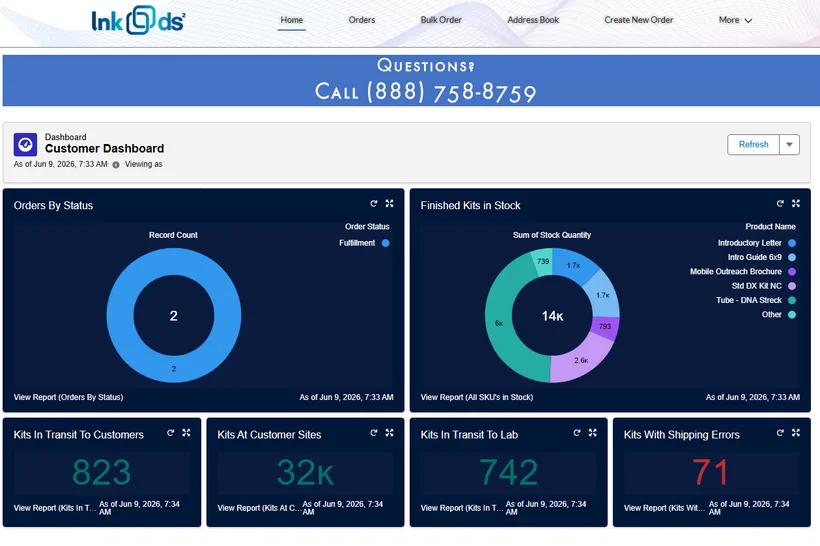
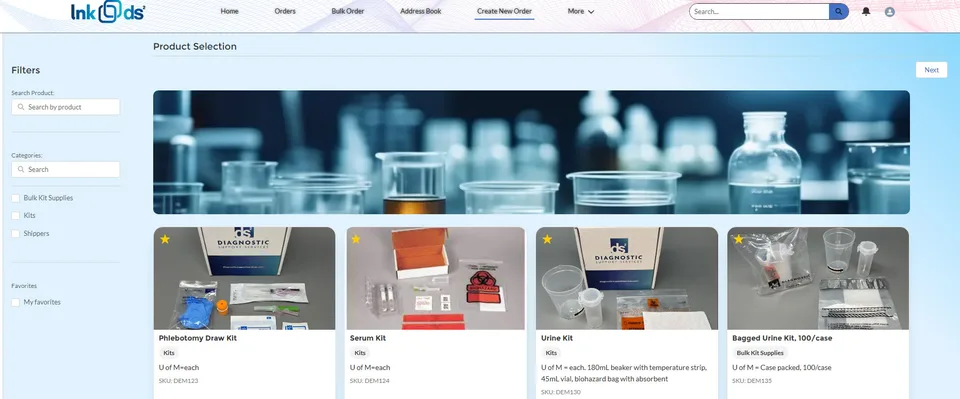
Manage Every Kit in LNK2DS2
Order custom kits, track every shipment in real time, and pull the reports you need, all from one secure portal built for lab operations teams.
Use Every Capability. Reap Every Benefit.
DS2's four core services work as a single, integrated stack: from the kit on the bench to the result in the EMR. Use one and you get a great vendor; use them together and you get a partner.
Custom Kits, Built to Your Protocol
Clinical trial or routine panel, every kit is configured to your exact spec and assembled the same way every batch. Procurement, build, QC, and distribution all happen under one roof, so you spend less time managing vendors and more time running your lab.
Explore KittingConfigured for your workflow
Components, labels, and packaging assembled to your exact spec, and rebuilt the same way every batch, every time.
Quality at every step
FDA-registered facility with documented assembly checks, lot-level traceability, and continuous improvement programs on every kit.

See it all working together
View the full end-to-end solution
Collection is one link, not the whole chain
DS2 fields more than 15,000 certified phlebotomists across all 50 states, covering mobile in-home draws, patient service center staffing, on-site hospital and lab placements, clinical-trial collections, and event and exam work. Every phlebotomist is credentialed, background-checked, and trained on the client's protocols before a first draw.
The draw is one link. DS2 also builds the kits the sample is collected into, moves it under temperature-controlled transport, and connects the result to the ordering system, so a lab or sponsor runs one accountable partner across collection, logistics, and data.
Mobile phlebotomy questions
What is mobile phlebotomy?
Mobile phlebotomy is blood and specimen collection performed by a trained phlebotomist who travels to the patient's home, workplace, or another location instead of the patient going to a draw site. The clinical procedure matches a fixed-site draw; the difference is the setting and the scheduling, identification, and handling logistics around it.
What does a mobile phlebotomist do?
A mobile phlebotomist travels to the patient, verifies identity with at least two identifiers, collects the blood or specimen to protocol using the correct tubes and order of draw, labels and handles it correctly, and routes it to the laboratory. It is the same clinical work as an in-hospital draw, done at the point of care.
Do phlebotomists have to be certified?
It depends on the state. Most US states do not legally require certification to draw blood, but California, Louisiana, Nevada, and Washington do. A national program staffs to the stricter of the applicable state rule and the client's own standard, so certification, background checks, and protocol training are applied everywhere.
Is mobile phlebotomy used in clinical trials?
Yes. Decentralized and hybrid trials use mobile phlebotomists for in-home and local visits. The FDA's 2024 guidance on trials with decentralized elements supports collecting samples at or near the participant's home, which relies on protocol-trained phlebotomists with study-grade documentation.
How is specimen quality maintained on an in-home draw?
Through the same pre-analytical controls a fixed site uses: two-identifier patient identification (Joint Commission NPSG.01.01.01), correct order of draw per the CLSI venous blood collection standard (PRE02, formerly GP41), and specimen handling matched to each analyte's stability. Off-site collection makes those controls more important, not less, because there is no registration desk or lab bench as a backstop.
Does DS2 provide phlebotomists nationwide?
Yes. DS2 fields a national network of certified phlebotomists across all 50 states for mobile in-home draws, patient service center and on-site staffing, clinical-trial collections, and event and exam work, dispatched and confirmed through a scheduling platform.
References
- 1.Carraro P, Plebani M. Errors in a stat laboratory: types and frequencies 10 years later. Clin Chem. 2007;53(7):1338-1342.
- 2.Lippi G, et al. Haemolysis: the leading cause of unsuitable specimens in clinical laboratories. Clin Chem Lab Med. 2008;46(6):764-772.
- 3.The Joint Commission, National Patient Safety Goal NPSG.01.01.01: use at least two patient identifiers when collecting blood samples and other specimens for clinical testing.
- 4.CLSI PRE02 (8th ed., 2025), Collection of Diagnostic Venous Blood Specimens, formerly GP41: standardized venipuncture technique and order of draw.
- 5.State phlebotomy licensure: California (CDPH Laboratory Field Services), plus Louisiana, Nevada, and Washington require certification/licensure. US BLS Occupational Outlook Handbook, Phlebotomists.
- 6.FDA, Conducting Clinical Trials With Decentralized Elements (final guidance, September 2024): specimens may be collected at or near the participant's home.
Ready to Simplify Your Diagnostic Workflow? Let's Talk.
No commitment required. Our team responds within 24 hours.