



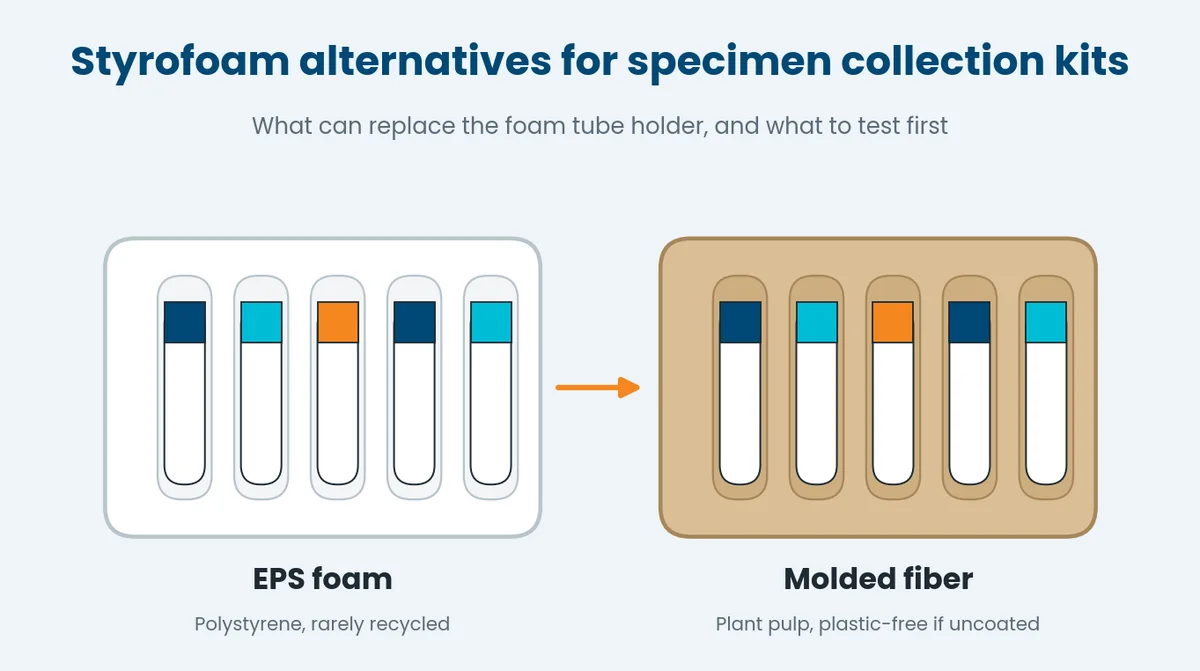
The closest Styrofoam alternative for specimen collection kits is molded fiber, a pressed plant-pulp tray that holds tubes in molded cavities the way expanded polystyrene (EPS) foam does. Corrugated inserts suit sturdier tubes on gentler lanes. For refrigerated specimens, evaporative cooling shippers such as NanoCool™ remove gel packs and the freezer step. Any replacement still has to pass UN3373 packaging tests as a complete package.
Most specimen kits in the US still hold their tubes in EPS foam, and mailers from most major suppliers look almost identical. This article covers what foam does in a kit, why labs and health systems want less of it, the materials that can replace it, and what to test before you switch.
What is Styrofoam, and why is it in specimen kits?
Styrofoam is a DuPont trademark for extruded polystyrene building insulation; the white foam in a specimen mailer is almost always expanded polystyrene (EPS). Kit makers use EPS because it's light and cheap to mold into tube-shaped cavities, and it cushions tubes while buffering temperature for a few hours on a hot loading dock. The basic foam tube mailer has barely changed in decades, so most labs have never had a reason to reconsider it. Everyone calls it Styrofoam anyway, and so does this article.
Why are labs and health systems moving away from Styrofoam?
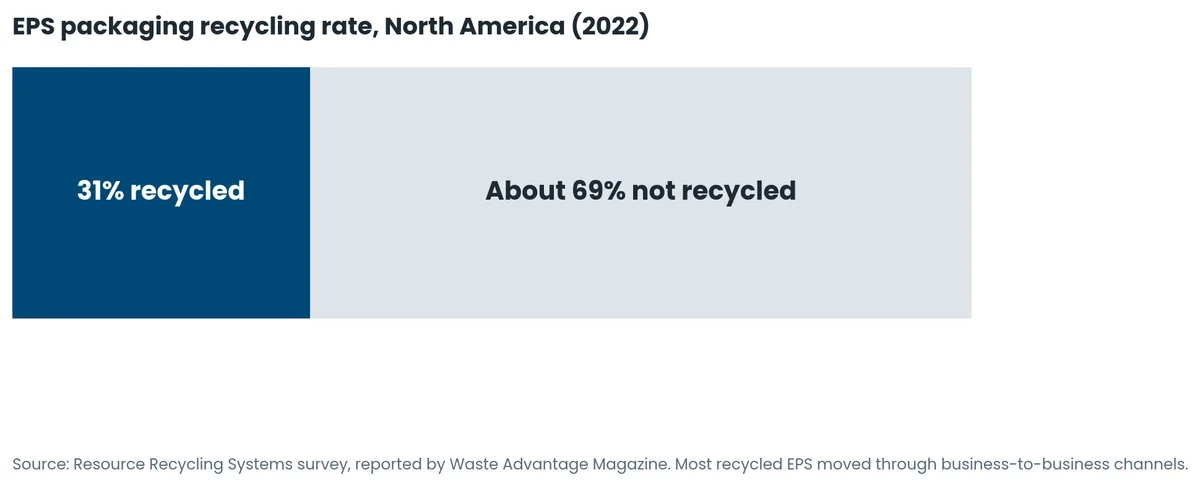
Labs and health systems want less Styrofoam because very little EPS gets recycled, and hospital buyers now count packaging in their emissions reporting. A 2022 survey by Resource Recycling Systems put the North American recycling rate for EPS packaging at about 31%. Most of that went through business-to-business channels, and few curbside programs accept foam at all.
The HHS Health Sector Climate Pledge, launched in 2022, asked signers to cut greenhouse gas emissions 50% by 2030, reach net zero by 2050, and complete an inventory of supply chain (Scope 3) emissions. Packaging that arrives with a lab's collection kits sits inside that supply chain.
State law points the same way. Maine, Maryland, and Oregon are among the states that restrict EPS foam food containers; medical packaging generally sits outside those laws today, but hospital procurement teams read the same headlines.
What does EPS foam do in a specimen kit?
EPS foam does two jobs in a specimen kit. It holds each tube in place and cushions it against drops, and it buffers the tubes against temperature swings for a few hours. Any replacement has to match the first job on every lane. Whether it needs to match the second depends on the specimen and the season: an ambient serum tube crossing Arizona in July needs more thermal margin than the same tube going across town in March.
What are the alternatives to Styrofoam for specimen tubes?
Molded fiber is the closest like-for-like replacement for EPS tube holders. Corrugated inserts suit a narrower range of tubes and lanes. Thermoformed plastic trays remove the foam but keep the plastic.
Molded fiber
Molded fiber is plant pulp pressed into shape in a heated mold. It's the same basic process as an egg carton, held to much tighter tolerances. Manufacturers make it from sugarcane bagasse (the fiber left after sugar extraction), FSC-certified wood fiber, bamboo, or recycled paper. A well-designed molded fiber tray grips each tube as firmly as a foam cavity, stacks for storage, and can run on existing kit assembly lines. Before a trial, ask the supplier two questions: do they hold ISO 13485 certification, and does the tray carry any plastic or PFAS-based coating? A coating changes how the tray can be disposed of.
Corrugated inserts
Corrugated inserts are die-cut paperboard pieces that fold around the tubes. They're easy to source and fit sturdy plastic tubes better than glass. Ask for drop-test results on your exact tube format before switching.
Thermoformed plastic trays
Thermoformed plastic trays, usually PET or PVC, are already common in diagnostic kits. They replace foam with a different plastic, so they don't help a buyer whose goal is less plastic.
| EPS foam | Molded fiber | Corrugated insert | Thermoformed plastic | |
|---|---|---|---|---|
| Material | Polystyrene | Plant pulp | Paperboard | PET or PVC |
| How it holds tubes | Molded cavities | Molded cavities | Die-cut slots | Molded cavities |
| Plastic-free | No | Yes, if uncoated | Yes, if uncoated | No |
| Curbside recycling | Rarely accepted | Often, if uncoated and clean | Usually, if clean | Varies by resin and program |
| Thermal buffer | Some | Less than EPS | Minimal | Minimal |
What replaces an EPS cooler for refrigerated specimens?
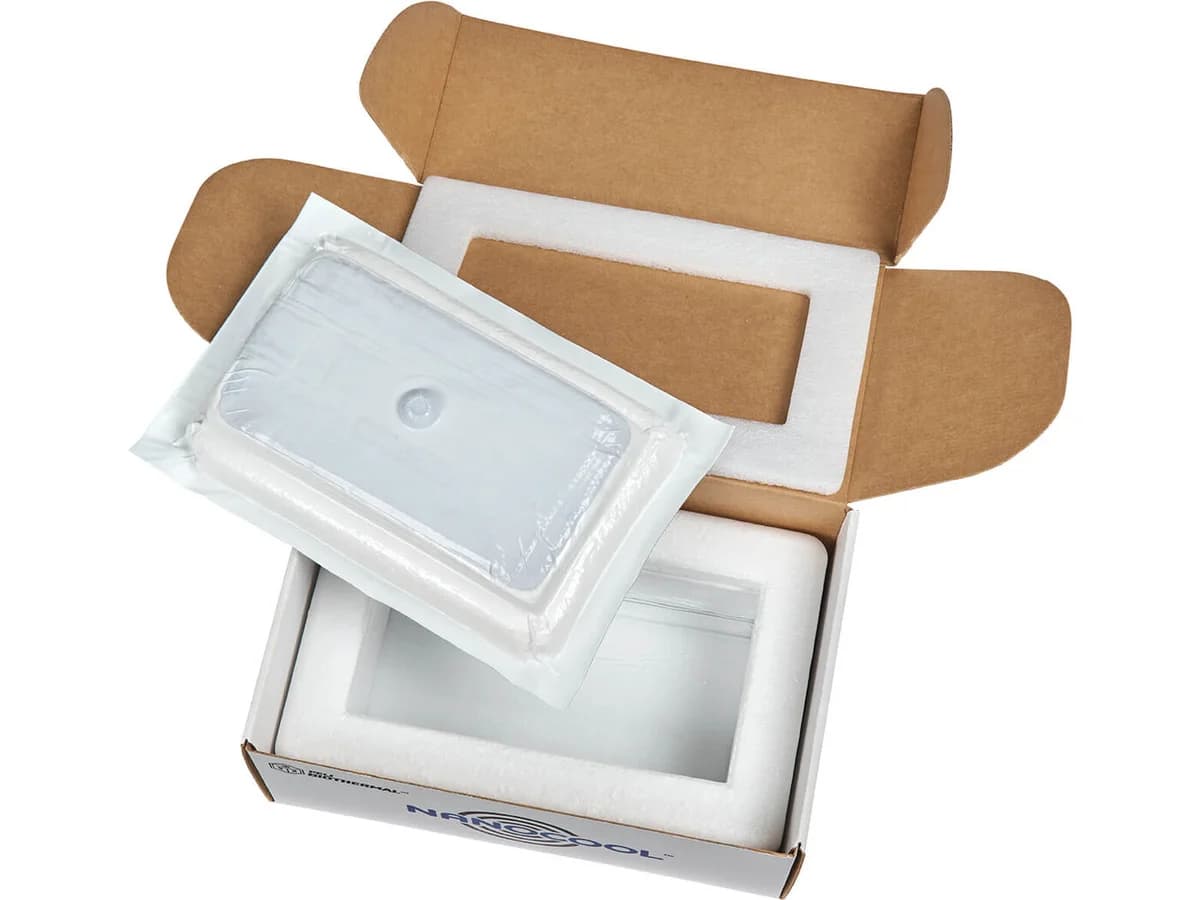
For 2–8°C specimens, evaporative cooling shippers such as NanoCool™ from Peli BioThermal replace the conventional pack-out of a foam cooler with frozen gel packs. A NanoCool shipper holds 2–8°C for 40 to 96 hours depending on the model. It uses a push-button cooling engine instead of gel packs, so the packing site needs no freezer. NanoCool shippers use vacuum-insulated panels, and the Cooling Systems line also includes foam insulation. Peli BioThermal says they're lighter than bulky single-use EPS shippers, which lowers dimensional weight. NanoCool is single use and refrigerated only, not frozen. Our comparison of dry ice, gel packs, and NanoCool covers the tradeoffs, and temperature-controlled transport covers how DS2 runs these lanes.
What should you check before switching from Styrofoam?
Check four things before replacing Styrofoam in a specimen kit:
- UN3373 compliance for the complete package
- what happens to the packaging at the receiving lab
- thermal performance on your hottest lane
- total cost per kit
Does the new packaging meet UN3373?
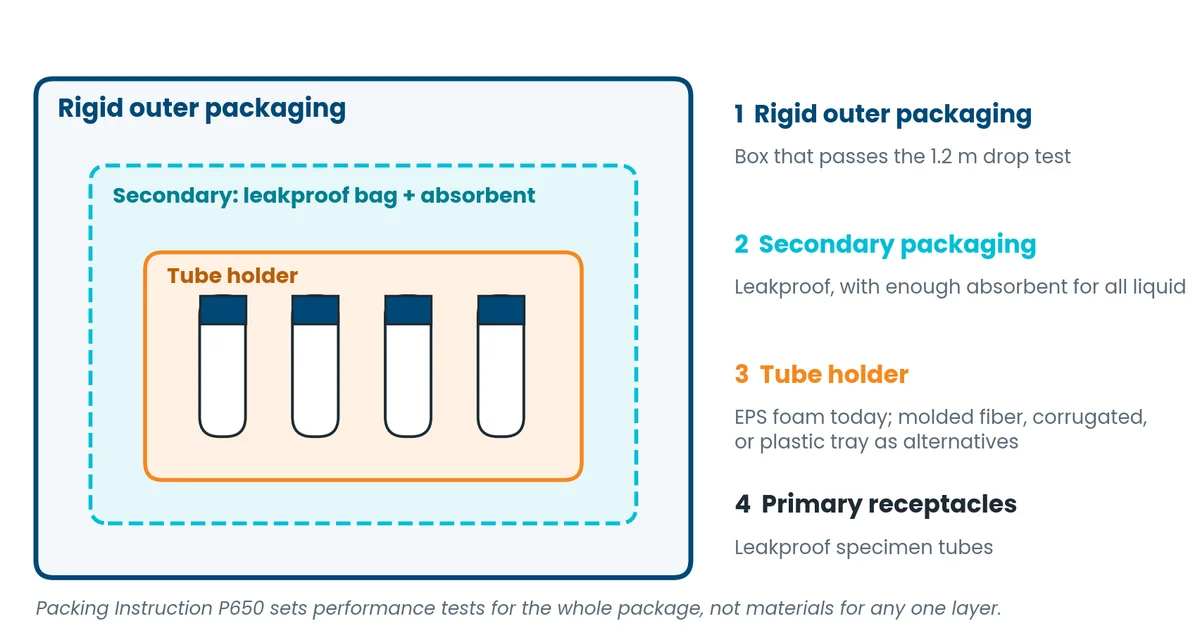
UN3373 shipments follow Packing Instruction P650, which the US mirrors in 49 CFR 173.199. P650 requires a leakproof primary receptacle, leakproof secondary packaging, and a rigid outer package, and the whole package must pass a 1.2-meter drop test. P650 sets performance standards, not materials, so a molded fiber tray can be part of a compliant package. Test the complete package, not the tray on its own. Our UN3373 Category B shipping guide covers the requirements.
Where does the packaging end up?
A recyclability claim depends on the receiving lab. A tray that arrives inside a biohazard bag may leave as regulated medical waste whatever it's made of. Check the lab's disposal policy before you promise customers anything about recycling.
Will it hold up in summer?
If foam was protecting ambient specimens through hot afternoons, run a summer-lane test before rollout. Our cold chain shipping guide explains the temperature bands.
What does it cost per kit?
Price the whole kit, freight included, rather than the tray alone, since lighter packaging can offset part of any unit-price difference.
How do you phase Styrofoam out of a specimen kit program?
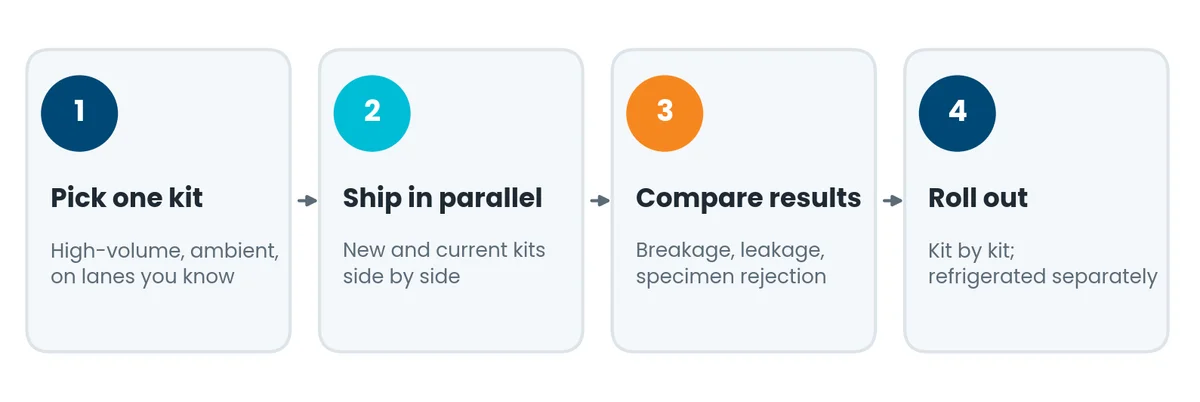
- Pick one high-volume ambient kit that ships on lanes you know well.
- Ship the new configuration alongside the current one for several weeks.
- Compare breakage, leakage, and specimen rejection rates between the two.
- Roll out kit by kit. Treat refrigerated kits as a separate project, since the cooler and the tube holder are separate decisions.
How does DS2 handle kit packaging?
Diagnostic Support Services (DS2) has used NanoCool cooling systems in its temperature-controlled specimen collection kits since 2019. DS2 designs, builds, and ships more than 20 million specimen collection kits a year from its FDA-registered, ISO 13485:2016-certified facility in Aurora, Illinois. That means the DS2 kitting team specifies packaging alongside everything else in the kit. For a fuller buying checklist, see A Decision-Maker's Guide to Custom Kitting.
Want a second look at the foam in your current kits? Talk to the DS2 kitting team.
Frequently asked questions
Is Styrofoam recyclable?
EPS foam, commonly called Styrofoam, is technically recyclable, but few curbside programs accept it. A 2022 Resource Recycling Systems survey put the North American recycling rate for EPS packaging at about 31%, mostly through business-to-business channels.
What is the best alternative to Styrofoam for specimen tubes?
Molded fiber is the closest replacement for EPS foam tube holders because it holds tubes in molded cavities the same way foam does. Corrugated inserts suit sturdy plastic tubes on gentler shipping lanes.
Can paper or fiber packaging meet UN3373 requirements?
Yes, if the complete package passes. UN3373 shipments follow Packing Instruction P650, which requires triple packaging and a 1.2-meter drop test for the whole package but does not specify foam or any other material.
What is molded fiber made from?
Molded fiber is pressed from plant pulp such as sugarcane bagasse, FSC-certified wood fiber, bamboo, or recycled paper, then formed in heated molds into trays that hold tubes in place.
What replaces gel packs and a foam cooler for 2–8°C specimens?
Evaporative cooling shippers such as NanoCool™ from Peli BioThermal replace frozen gel packs and the freezer step for 2–8°C shipments, holding temperature for 40 to 96 hours depending on the model. NanoCool is for refrigerated specimens only, not frozen.
Sources
- DuPont, Styrofoam™ Brand XPS Insulation
- Resource Recycling Systems via Waste Advantage Magazine, EPS packaging recycling rate in North America (2022)
- Health Care Without Harm, HHS announces pledge to mobilize health care sector to reduce emissions
- Maine DEP, Polystyrene Foam Food Service Container Ban · Maryland Department of the Environment, Polystyrene Food Service Products Ban · Oregon DEQ, Foodware Containers and Polystyrene Foam
- eCFR, 49 CFR 173.199: Category B infectious substances
- Peli BioThermal, NanoCool Cooling Systems and NanoCool Universal Systems
- Wikipedia, Molded pulp
NanoCool™ is a trademark of Peli BioThermal.